Where funding leaves gaps

Many people give up on their plans again, often for lack of money, and venture capital barely reaches women founders.

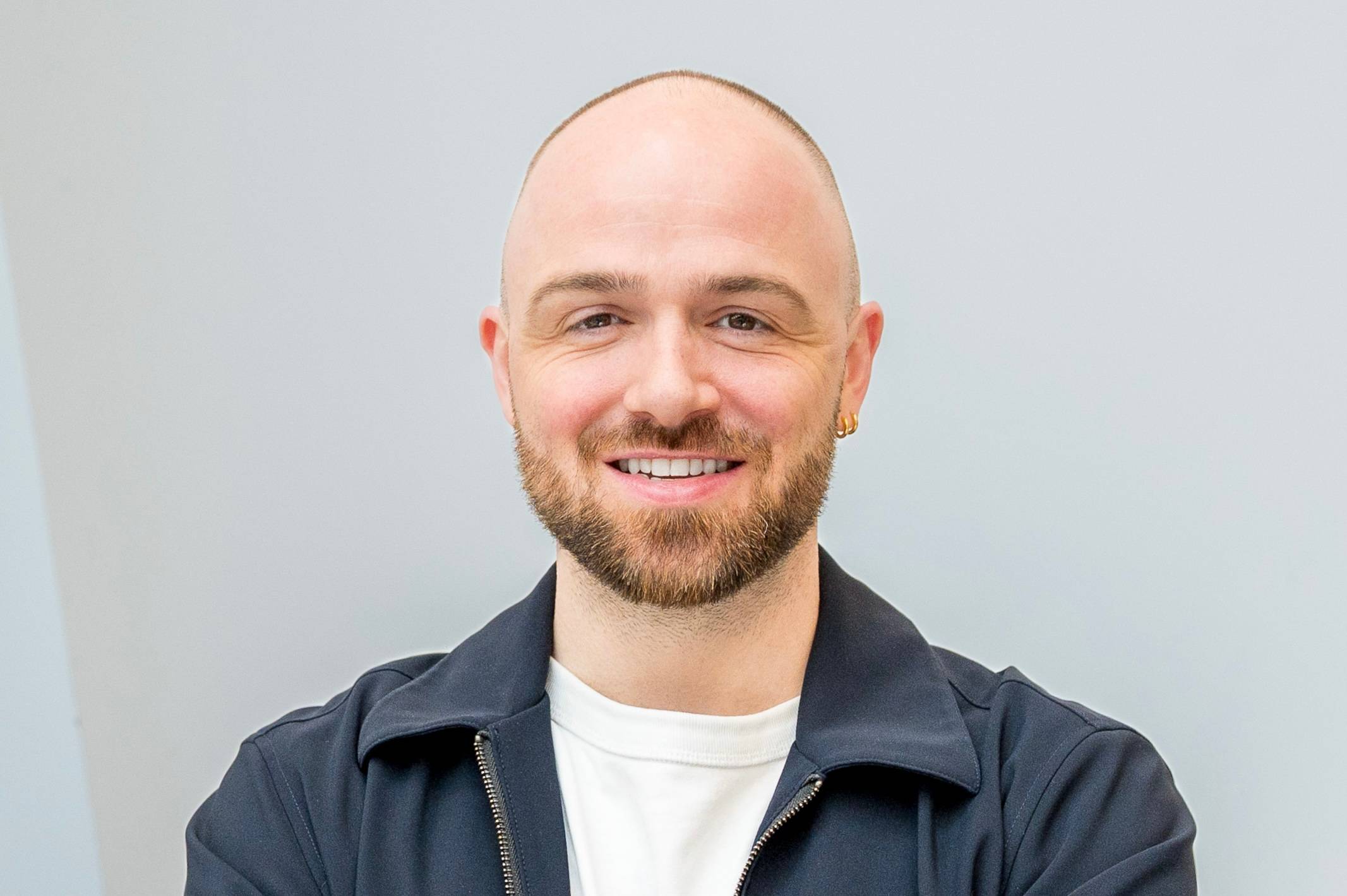
Steven Strehl, Founder of everypreneurs

Our funding landscape is full of gaps, above all in early-stage finance. People of lower socio-economic status already struggle with the application: complicated financial and tax language puts them off and becomes an obstacle to starting a business.1 Anyone who writes funding applications only for people from an academic background isn’t backing entrepreneurship, they’re backing where people come from.

Women and men in business

Entrepreneurship is still a long way from reaching all of society

The potential is there. Access isn’t.

What holds people back

The bars show the reasons given by people who have never been self-employed and aren’t planning to start a business. The figures below show where plans already under way fall apart.

Over 4 in 10
people planning a business give up on the plan every year, according to KfW’s analysis for 2025. That’s about twice as many plans abandoned as businesses started.3KfW-Gründungsmonitor 2026, KfW Research, 2025.
64%
of people who started or planned a business in 2025 and had trouble getting finance gave up on it. Without that trouble, 36 per cent did. Red tape, the most often named obstacle, barely raised the share.3KfW-Gründungsmonitor 2026, KfW Research, 2025.

Founders with an immigrant background

Gap
People with an immigrant background start businesses more often than average, and yet KfW says their entrepreneurial potential is “not fully tapped”: given how many of them would like to be self-employed, they seem less likely to try to start a business.4
Cause
According to KfW, the usual obstacles hardly explain it: people with an immigrant background name them rather less often than the population as a whole.4 But anyone from outside the EU needs a separate residence permit to start a business, and the immigration authorities and chambers check the business idea and the financing for it. On top of that come long waits for visas and checks.5 Responsibilities spread across many offices, an opaque funding landscape and language barriers make starting up harder still.1
Consequence
So part of the potential of a group that already contributes more than its share to new businesses goes unused.4
34%
of founders in Germany had an immigrant background in 2025, about 235,000 people by our calculation. In the working-age population it was 28 per cent.3KfW-Gründungsmonitor 2026, KfW Research, 2025.
18.8%
was the TEA rate in 2025 among people with a migration background, against 12.1 per cent among those without.6Global Entrepreneurship Monitor: Unternehmensgründungen im weltweiten Vergleich – Länderbericht Deutschland 2025/26, RKW Kompetenzzentrum, 2025.

Calculated as 34 per cent of about 690,000 founders in 2025, both figures from KfW.3 KfW counts first and second generations, meaning people who immigrated themselves or whose parents both did. People with an immigrant background would choose self-employment more often than the population as a whole.3 But according to KfW, the lower standing of self-employment in Germany holds them back from going ahead more often than it does the population as a whole.4 The GEM counts more widely: one parent born abroad is enough.6

35%
of people with an immigrant background would rather have been self-employed than employed in 2025, against 26 per cent of the population as a whole.3KfW-Gründungsmonitor 2026, KfW Research, 2025.

Women founders and venture capital

Gap
Women are less likely than men to want to work for themselves, and that gap appears to decide how many of them start a business.2
Cause
KfW sees gender stereotypes at school and in upbringing among the reasons.3 Entrepreneurial role models seem to help women in particular to go ahead, but only 17 per cent of women have one, against 21 per cent of men.2
Consequence
The gap opens long before anyone fills in a funding application. With an entrepreneurial role model, women start businesses about twice as often as on average, KfW finds, and it recommends making successful women entrepreneurs more visible.2
About 1%
of venture capital in 2025 went to all-female founding teams: 53 million out of 7.8 billion euros. All-male teams got 94 per cent.7Startup-Finanzierungen: Nur 1 Prozent des Risikokapitals fließt an rein weibliche Jungunternehmen, EY, zum EY Startup-Barometer 2026: Gründerinnen und Gründer, 2025.
19.6%
of startup founders were women in 2026.8Deutscher Startup Monitor 2026, Startup-Verband, Alexander Hirschfeld, Jannis Gilde und Vanusch Walk, 2026.
35%
of all new businesses, not just startups, were started by women in 2025, and only 27 per cent of full-time ones.3KfW-Gründungsmonitor 2026, KfW Research, 2025.

The venture capital figures come from EY’s analysis for 2025, which counts only startups whose founding team is known. In all, startups raised almost 8.4 billion euros in 2025.7,9 The Female Founders Monitor 2025 puts the share for all-male teams at 91 per cent.10

22%
of women would rather have been self-employed than employed in 2025, against 31 per cent of men.3KfW-Gründungsmonitor 2026, KfW Research, 2025.
Share of women among startup founders, 2020 to 20268
  • 2020: 15.9%
  • 2021: 17.7%
  • 2022: 20.3%
  • 2023: 20.7%
  • 2024: 18.8%
  • 2025: 19.8%
  • 2026: 19.6%

The share rose every year until 2023 and has stayed just under 20 per cent since.

Steven Strehl, Founder of everypreneurs

94 per cent of venture capital went to all-male founding teams in 2025.7 The share of women among startup founders is 19.6 per cent.8 That’s wasted entrepreneurial potential: half of society isn’t reflected in today’s investment logic.

Starting on the side

Counted by KfW: everyone who went self-employed that year, with a new business, by taking one over or by buying in. The respondents say themselves whether it’s full-time or on the side.

Gap
Most new businesses today start on the side, and most are meant to stay that way.3
Cause
Only people who are unemployed and become self-employed as their main occupation can get the start-up grant from the Federal Employment Agency.11 Main occupation means at least 15 hours a week and no less than all other work combined; a sideline isn’t eligible.12 For businesses on the side, KfW offers loans, such as its StartGeld.13
Consequence
Anyone who starts a business alongside a job, as most side-business founders do, can get a loan but not the start-up grant.
70%
of all new businesses in Germany in 2025 were started on the side, a higher share than ever before. That’s about 483,000.3KfW-Gründungsmonitor 2026, KfW Research, 2025.
59%
of people who started a business on the side in 2025 kept their job while doing it. Among full-time founders it was 12 per cent.3KfW-Gründungsmonitor 2026, KfW Research, 2025.
21%
of people who started a business on the side in 2025 planned to make it full-time within a year. The long-term average is 23 per cent.3KfW-Gründungsmonitor 2026, KfW Research, 2025.

Older founders and succession

Gap
Older people rarely start businesses.3 At the same time, more and more owners are looking for a successor, and KfW sees a “succession gap” that is widening as the baby boomers retire.14
Cause
There aren’t enough successors: 69 per cent of SMEs see finding a suitable candidate as an obstacle.14 When older people do start a business, they take over an existing one less often than younger people.15 Yet professional and industry experience makes starting a business more likely.16
Consequence
For the first time, more owners plan to close their business than to hand it on.17 KfW recommends making successful takeovers more visible and providing better information on how to finance them.15
11%
of new businesses in 2025 were started by people aged 50 to 64. The average founder was 34.2 years old.3KfW-Gründungsmonitor 2026, KfW Research, 2025.
Over 54
was the average age of SME owners in 2025. In 2003 it was 45.17Nachfolge-Monitoring Mittelstand 2025: Pläne für Geschäftsaufgaben wachsen erneut – Kaufpreisvorstellungen deutlich gestiegen, KfW Research, Fokus Volkswirtschaft Nr. 526, Michael Schwartz, 2025.
545,000
SMEs said in 2025 that they wanted to find a successor by the end of 2029, about 109,000 a year. 569,000 owners planned not to carry on their business by then.17Nachfolge-Monitoring Mittelstand 2025: Pläne für Geschäftsaufgaben wachsen erneut – Kaufpreisvorstellungen deutlich gestiegen, KfW Research, Fokus Volkswirtschaft Nr. 526, Michael Schwartz, 2025.
10%
of new businesses in 2025 were takeovers of an existing firm, roughly the long-term average. Another 4 per cent were active stakes.3KfW-Gründungsmonitor 2026, KfW Research, 2025.

Regions

Gap
Far more businesses are started in cities than in the countryside, and fewer in the east than in the west.16,18
Cause
Above all, cities have more people with what makes starting a business more likely: professional and industry experience, a high level of formal education, an above-average income. But the place matters too: big cities offer more business services, more workers and bigger markets.16
Consequence
Anyone who wants to start a business in the countryside has less of that environment. The GEM recommends investing in schools, universities and further training there too, and keeping or bringing back people who are more likely to start a business.16
13.2%
of 18 to 64-year-olds in Berlin were starting a business or running a young one in 2020 to 2024. In Saarland it was 3.7 per cent, and all five eastern states outside Berlin were among the six with the lowest rates.18Wo in Deutschland wird am meisten gegründet?, RKW Kompetenzzentrum und Thünen-Institut für Innovation und Wertschöpfung in ländlichen Räumen, Pressemitteilung vom 3. Juli 2025 mit der Tabelle „GEM-Gründungsquote in den 16 deutschen Bundesländern“, 2020–2024.
7.5%
was the early-stage entrepreneurship rate in urban areas from 2015 to 2024, against 5.4 per cent in rural ones.16Global Entrepreneurship Monitor: Unternehmensgründungen im weltweiten Vergleich – Länderbericht Deutschland 2024/25, RKW Kompetenzzentrum, in Kooperation mit dem Thünen-Institut, 2024.

Growing after the start

Gap
For large funding rounds, German startups increasingly depend on capital from abroad.8
Cause
Domestic funds are often too small to take part in rounds of that size.8 The European Commission sees two funding gaps: at the early stage and later, when a company scales up.6
Consequence
When a startup like that goes public or is sold, much of the value it creates moves to the US.8
39%
of the money invested in German startups up to September 2026 came from US investors, as much as at the peak of the 2021 boom. German investors put in 23 per cent, European ones 28 per cent.8Deutscher Startup Monitor 2026, Startup-Verband, Alexander Hirschfeld, Jannis Gilde und Vanusch Walk, 2026.

Do you find our work relevant?

Support us

Sources

  1. 1Das Potenzial der Vielen heben: Förderlücken in der Startup-Förderung schließen (opens in a new tab), D64 – Zentrum für Digitalen Fortschritt, AG Startup-Förderung, Positionspapier. Reference year 2022.
  2. 2KfW-Gründungsmonitor 2024 (opens in a new tab), KfW Research. Reference year 2023, published 2024.
  3. 3KfW-Gründungsmonitor 2026 (opens in a new tab), KfW Research. Reference year 2025, published 2026.
  4. 4Personen mit Einwanderungsgeschichte haben große Bedeutung für Gründungstätigkeit (opens in a new tab), KfW Research, Fokus Volkswirtschaft Nr. 527, Georg Metzger. Reference year 2024, published 2026.
  5. 5Migrantische Unternehmensgründungen (opens in a new tab), Bundeszentrale für politische Bildung, Migrationspolitik im Fokus, Vera Hanewinkel und Christina Mecke. Reference year 2025.
  6. 6Global Entrepreneurship Monitor: Unternehmensgründungen im weltweiten Vergleich – Länderbericht Deutschland 2025/26 (opens in a new tab), RKW Kompetenzzentrum. Reference year 2025, published 2026.
  7. 7Startup-Finanzierungen: Nur 1 Prozent des Risikokapitals fließt an rein weibliche Jungunternehmen (opens in a new tab), EY, zum EY Startup-Barometer 2026: Gründerinnen und Gründer. Reference year 2025, published 2026.
  8. 8Deutscher Startup Monitor 2026 (opens in a new tab), Startup-Verband, Alexander Hirschfeld, Jannis Gilde und Vanusch Walk. Reference year 2026.
  9. 9Startups aus Deutschland sammelten 2025 knapp 8,4 Milliarden Euro Risikokapital ein (opens in a new tab), EY, zum EY Startup-Barometer Deutschland Januar 2026. Reference year 2025, published 2026.
  10. 10Female Founders Monitor 2025 (opens in a new tab), Startupverband, im Auftrag der Bertelsmann Stiftung. Reference year 2025.
  11. 11§ 93 Gründungszuschuss (opens in a new tab), Sozialgesetzbuch Drittes Buch, gesetze-im-internet.de. Reference year 2026.
  12. 12Fachliche Weisungen (FW) zum Gründungszuschuss §§ 93, 94 SGB III (opens in a new tab), Bundesagentur für Arbeit, BA Zentrale, Stand 13. September 2023. Reference year 2023.
  13. 13ERP-Gründerkredit StartGeld (opens in a new tab), KfW, Merkblatt Kredit Nr. 067, Stand 18. Juni 2026. Reference year 2026.
  14. 143.4 Chance Unternehmensnachfolgen: Zukunft sichern (opens in a new tab), KfW Research, Standort Zukunft: Wie Deutschland zu neuer Stärke und Wachstum findet. Reference year 2025, published 2026.
  15. 15Demografische Alterung setzt Unternehmen bei Nachfolgen doppelt unter Druck (opens in a new tab), KfW Research, Fokus Volkswirtschaft Nr. 435, Georg Metzger. Reference year 2022, published 2023.
  16. 16Global Entrepreneurship Monitor: Unternehmensgründungen im weltweiten Vergleich – Länderbericht Deutschland 2024/25 (opens in a new tab), RKW Kompetenzzentrum, in Kooperation mit dem Thünen-Institut. Reference year 2024, published 2025.
  17. 17Nachfolge-Monitoring Mittelstand 2025: Pläne für Geschäftsaufgaben wachsen erneut – Kaufpreisvorstellungen deutlich gestiegen (opens in a new tab), KfW Research, Fokus Volkswirtschaft Nr. 526, Michael Schwartz. Reference year 2025, published 2026.
  18. 18Wo in Deutschland wird am meisten gegründet? (opens in a new tab), RKW Kompetenzzentrum und Thünen-Institut für Innovation und Wertschöpfung in ländlichen Räumen, Pressemitteilung vom 3. Juli 2025 mit der Tabelle „GEM-Gründungsquote in den 16 deutschen Bundesländern“. Reference year 2020–2024, published 2025.

Don’t miss the start of the programme

Occasional updates by e-mail. What we offer, what we learn and what the next steps are.