Key findings from applied basic income research
What does reliable money do to people? And what doesn’t it do? Germany’s basic income pilot offers answers that matter for entrepreneurship across society.
At the heart of our work at everypreneurs is the combination of money and trust for the development of entrepreneurs. That’s why findings from basic income research interest us: what happens when people receive money reliably, with no direct return, over a certain period?
The Pilotprojekt Grundeinkommen tested this in Germany. The analysis covers 107 people who received EUR 1,200 a month for three years with no conditions, and 1,580 people who did not.1
The study ran from 2021 to 2024. Mein Grundeinkommen e. V. funded and implemented it, and researchers from the German Institute for Economic Research (DIW Berlin), the Vienna University of Economics and Business, the University of Oxford and the Frankfurt School of Finance & Management carried it out. Steven Strehl was executive chair of the board of Mein Grundeinkommen during this time.
Alongside the Pilotprojekt Grundeinkommen, the association has collected anecdotal evidence since 2015 of what unconditional cash payments do for people. It is documented in countless winner portraits published by journalists.
What the study shows
People with security keep working
The share of people in work stayed the same. Working hours fell by 1.3 hours a week on average, a difference that is not statistically significant.2
A clearer head
Mental health, life satisfaction and sense of purpose rose clearly. 18 months after the last payment, 91% of the effect was still there.3
More self-determination
People felt more in control of their lives, and one in four said unprompted that they had more freedom of choice. According to the researchers, money works when it is regular, guaranteed, unconditional, individual and generous enough.3
Money moves on
Recipients donated EUR 28 instead of EUR 12 a month and gave EUR 126 instead of EUR 50 to family and friends. Unconditional money doesn’t stop with one person.1
Savings build up
Recipients put aside EUR 779 a month, the comparison group EUR 332. At the end, 13% had less than EUR 10,000 in assets, against 27% in the comparison group.1
What the interviews show
These stories come from portraits of winners. They are individual cases, not measurements.
What money alone doesn’t do
There were no more self-employed people: the share was 7% in both groups. DIW found no sign that the money served as a catapult into self-employment.1
A similar study from the US shows the same pattern: with USD 1,000 a month, interest in starting a business and willingness to take risks grew, but the number of new businesses did not.9 Both studies hint that this could change over time.2,9
For us this means: money creates room, but it doesn’t start anything by itself. That’s why we combine it with knowledge, network and community.
The questions this raises
- How much security does self-determination need?
- Who decides how much a person needs?
- What remains when the money ends?
- How does the wish to start something become a business?
Money and trust
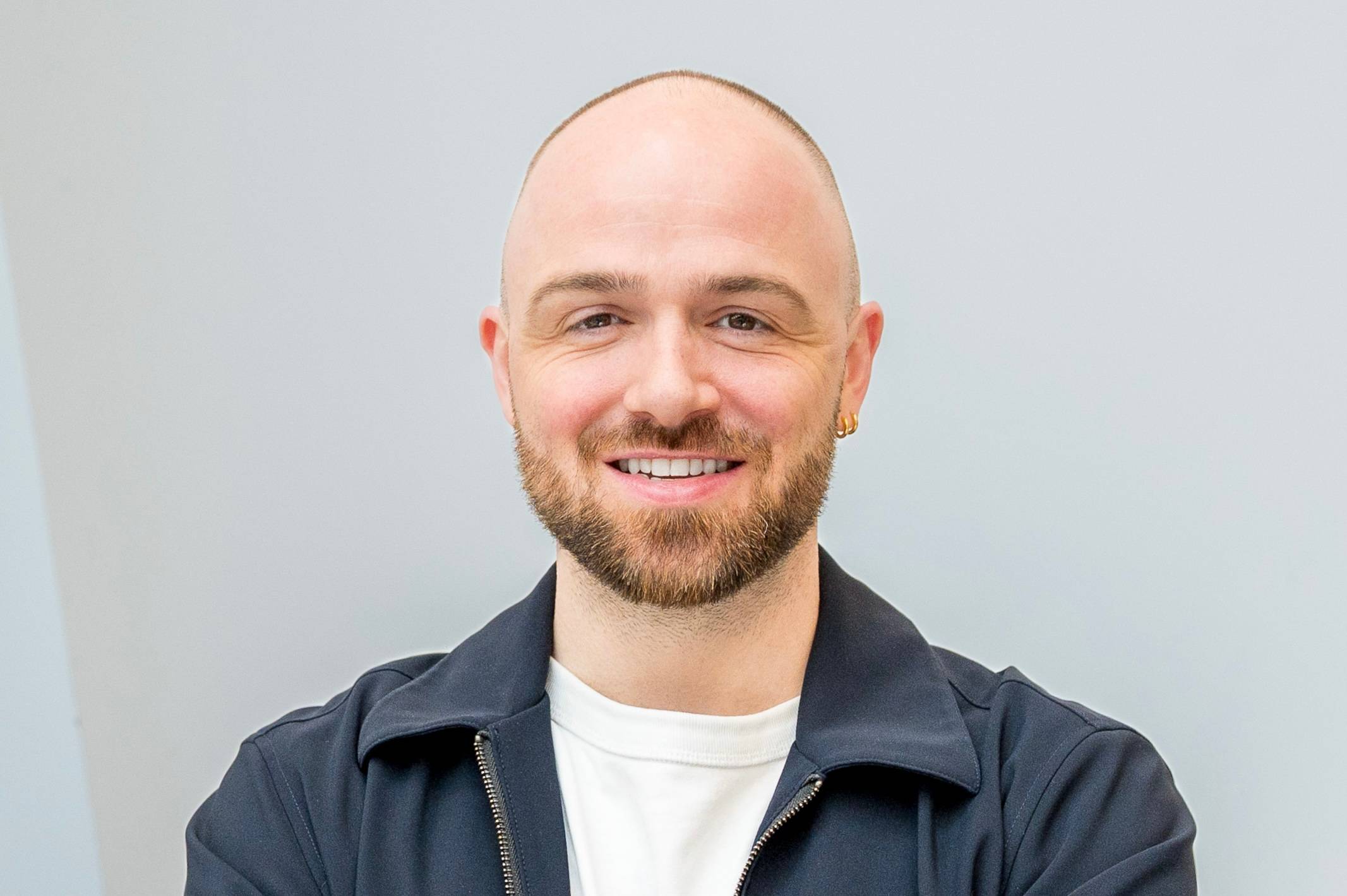 Steven Strehl, Founder of everypreneurs
With my former board colleague Greta Stahr, I gave an insight into setting salaries by need instead of classic parameters, such as education and hierarchy level, and showed what we learned from it.
Sources
- 1Pilotprojekt Grundeinkommen: kein Rückzug vom Arbeitsmarkt, aber bessere mentale Gesundheit (opens in a new tab), DIW Wochenbericht 15/2025. Reference year 2025.
- 2Basic income and labor supply: Theory and evidence from an RCT in Germany (opens in a new tab), Bernhard, Bohmann, Fiedler, Kasy, Schupp, Schwerter. Reference year 2026.
- 3Cash Transfers, Mental Health, and Agency: Evidence from an RCT in Germany (opens in a new tab), Bohmann, Fiedler, Kasy, Schupp, Schwerter. Reference year 2026.
- 4Arbeit (opens in a new tab), Pilotprojekt Grundeinkommen. Reference year 2026.
- 5Was würdest du tun? 24 Menschen erzählen, was ein Jahr bedingungsloses Grundeinkommen für sie verändert hat (opens in a new tab), Ralf Julke, Leipziger Zeitung. Reference year 2019.
- 6Das Glücksspiel: Wie ein bedingungsloses Grundeinkommen das Leben verändert (opens in a new tab), Marie Rövekamp, Tagesspiegel. Reference year 2017.
- 7Grundeinkommen für Yvonne: 1000 Euro und der Traum vom besseren Leben (opens in a new tab), Monika Ahrens, Bundeszentrale für politische Bildung. Reference year 2021.
- 8Handwerkerin: „Grundeinkommen ist ein wahnsinniger Motor“ (opens in a new tab), Eileen Wesolowski, Deutsche Handwerks Zeitung. Reference year 2021.
- 9The Employment Effects of a Guaranteed Income: Experimental Evidence from Two U.S. States (opens in a new tab), Vivalt, Rhodes, Bartik, Broockman, Krause, Miller, NBER Working Paper 32719. Reference year 2026.